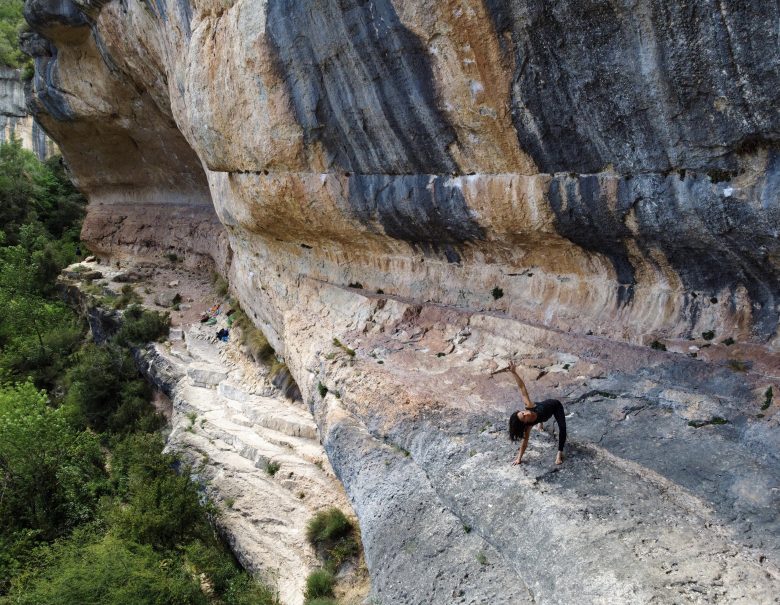
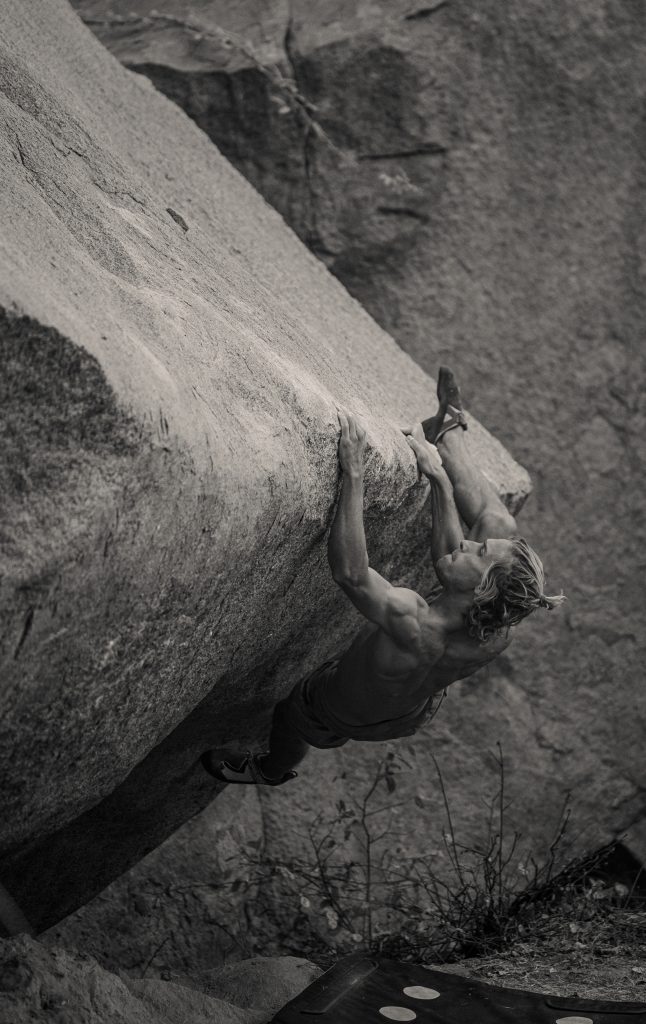
Learning to breathe increases our lung capacity, allows us to climb while managing stress and fatigue, maximizing rest, and deeply connecting to what we are doing. The mind is calm, present, and focused. The inner dialogue calms down and transforms into positive and motivating self-talk. The muscles are properly oxygenated, increasing endurance. When climbing, breathing must be as fluid as possible, connected with movement.
What is Pranayama?
While practicing yoga, Pranayama, or breathing, is of primary importance. The word “Prana” means “vital force.”
Prana is the sum of all the energies contained in the universe. It is what animates all of creation and manifests everywhere and at all times in different forms. In real life, Prana is a single energy, but it appears in many forms and functions. The word “Yama” means “to control” or “to direct,” while “Ayama” means “to expand,” “to strengthen,” or “to stretch.”
Pranayama is the control and expansion of Prana. Prana flows through the body via the Nadis, the subtle energy channels that run throughout the body. The three main Nadis are: Ida, Pingala, and Sushumna. We’ll look more into them in another article.
Within the Pranamayakosha or energetic body, there are 72,000 nadis. These 72,000 nadis stem from three fundamental nadis – the right, left, and central ones – which are Ida, Pingala, and Sushumna. The word “nadi” does not mean nerve. Nadis are pathways or channels of prana in our human system.
These 72,000 nadis do not have a physical manifestation. This means that if you open the body and look inside, you will not find them physically. But as you become more and more aware, you will notice that the energy does not move randomly but follows predetermined paths. There are 72,000 different ways in which energy or prana moves within your body.
The importance of breath
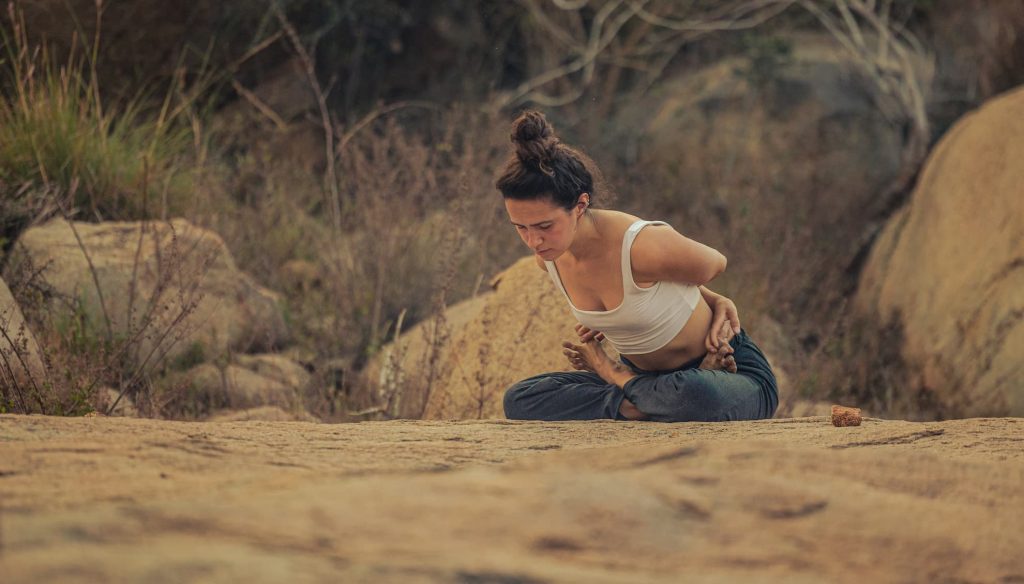
In common terminology, Pranayama refers to techniques for consciously modifying the breath, one of the main vehicles through which our Prana flows.
Practicing pranayama is learning the techniques for a conscious prolongation of inhalation, exhalation, and breath retention. As we inhale and retain the breath, this Prana enters and spreads within us; exhaling expels it, taking away what we do not need and what no longer belongs to us.
In different terms, inhalation introduces oxygen into the bloodstream via the lungs and nourishes the entire body, while exhalation expels carbon dioxide from the body.
The quality of our breath directly influences the quality and length of our life. According to the Yogis, the more capable we are of lengthening and controlling our breath, the longer we will remain healthy and alive.
"When the breath is unsteady, the mind is unsteady. When the breath is steady, the mind is steady."
Breathing and Emotions
The control of breath is also an important tool to gain control over thoughts and feelings. Practicing pranayama allows us to fully use our respiratory and lung capacity.
So how is breathing related to emotions? If you think about it, it’s very simple. What happens when you are nervous? You start breathing quickly and primarily in the upper part of the lungs, in the chest. So yes, the way you feel influences the way you breath. The fact is that we can reverse the process, and if we are nervous, for example while climbing, we can consciously return to controlled breath and calm our mind.
Get comfortable and start breathing
To obtain the benefits of breathing techniques on body and mind, it is good to follow some guidelines that will make the practice easier:
- Sit in a comfortable position with a straight back. You can sit on a pillow or a yoga block to avoid compressing the abdominal area and allow the diaphragm to move freely.
- Keep the nostrils clear and clean before starting. If one nostril is blocked, do some cleaning 🙂
- Never force the breathing techniques and do not overdo it, especially if you are a beginner.
- Practice Pranayama on an empty stomach, at least a couple of hours after your last meal.
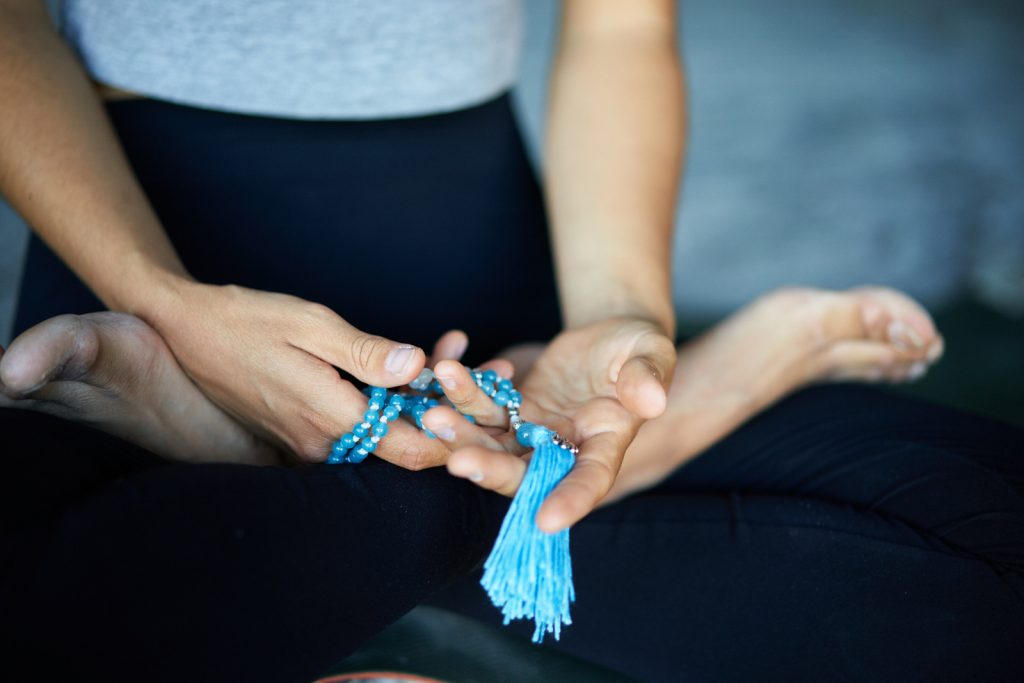
I hope this short article was useful, and my recommendation is to start practicing some breathing basic techniques on a daily basis, even few minutes per day will be very beneficial.
Before climbing, take your time to calm your breath and mind. This will help you during your performance. For example a very useful technique to regain calm and concentration is Nadi Shodana, or alternate nostril breathing, which allows us to balance Ida and Pingala. We will further deepen this technique in our next article.
Enjoy the flow.