Bouldering in Sardinia offers something new and different from the usual well-known spots around the world.
This Mediterranean paradise, better known for its unique coastline and ancient culture, becomes a hidden gem for outdoor enthusiasts and climbers, especially during fall and winter seasons. From the smooth and rough granite boulders of Capo Testa to the inland plateau of Arzachena, North Sardinia offers bouldering challenges suitable for all skill levels.
In this article, we’ll explore the basics you need to know if you’re planning a trip to Sardinia. Of course, feel free to contact us if you need specific information, gear, or accommodation.
Why Choose Sardinia for Bouldering?
Geographical Diversity
Sardinia’s geographical diversity makes it an unique place to be discovered and offers a big variety of landscapes, different spots and climbing preferences.
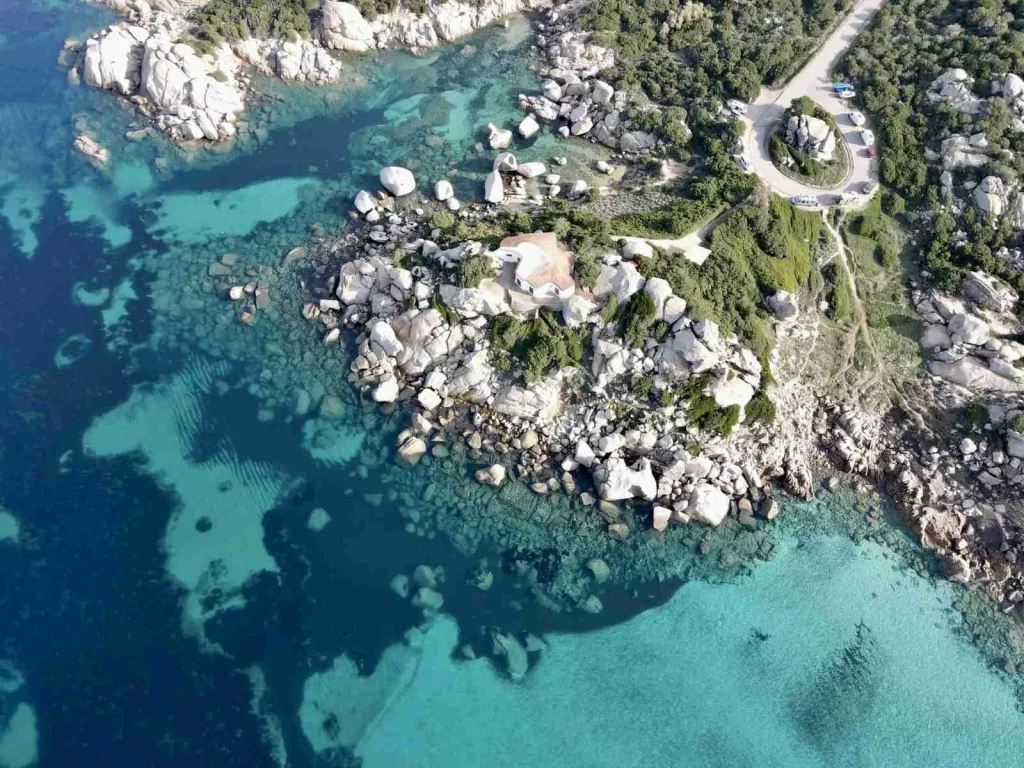
Along the coast, climbers can enjoy breathtaking views, staring under amazing boulders while looking at the sea. Inland, the landscape shifts completely into crags and mountainous areas that provide a completely different climbing experience. Where the sea disappears it leaves space to huge plateus covered by boulders.
From plateaus to Sardinia’s forested areas, such as the woodlands around S. Antonio di Gallura and Monte Limbara, boulder fields appear among the trees, providing a unique and magical setting for bouldering.
Unique Rock Formations
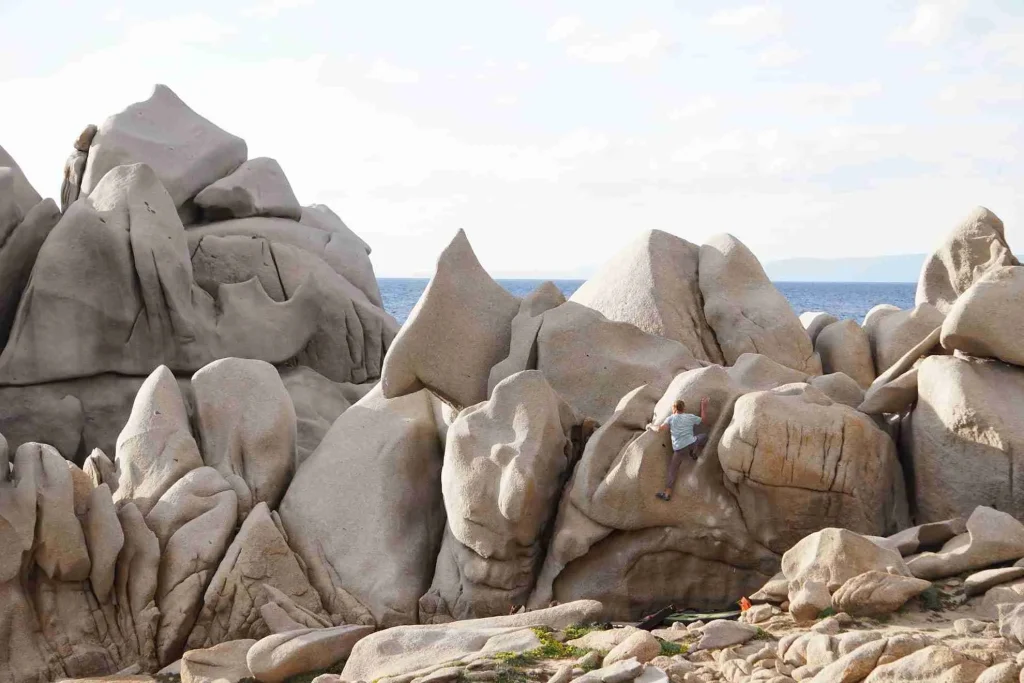
Sardinia’s rock formations are starting to attract climbers from all around the world. The northern part of the island is primarily composed of granite, and within Gallura region the concentration of boulders is unimaginable.
Smooth, rounded shapes and high roughness and friction make this regione ideal for those who enjoy technical, balance-based climbs but also physical crazy overhangs with typical “tafoni” shapes that you can only find here and in few other spots around the world.
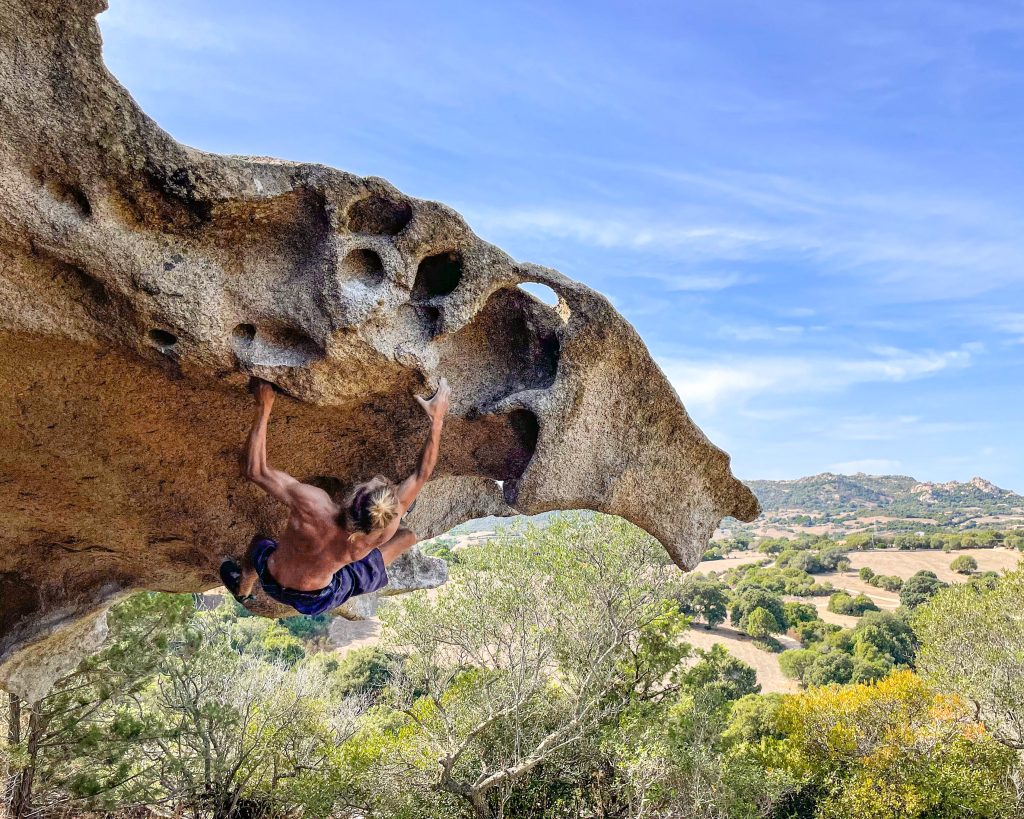
These granite formations have been shaped by thousands of years of wind and water erosion, resulting in a surreal landscape of sculpted boulders and towering monoliths that provide a unique playground for bouldering.
Ideal Climbing Conditions
Sardinia’s Mediterranean weather is another reason why it is a top choice for bouldering.
The island enjoys mild winters and hot, dry summers, making it possible to climb outdoors almost year-round, except from the hottest months. Spring (March to May), autumn (September to November) and especially December are considered the best months for bouldering, as the temperatures are comfortable, and the weather is generally stable, with less rainfall. During these months climbers can enjoy long, sunny days and cool breezes – the perfect climbing conditions!
Even in the early summer, when temperatures can rise, the island offers plenty of shaded areas and cool sea breezes along the coast, allowing climbers to stay quite comfortable.
Early mornings and late afternoons are particularly pleasant for climbing. In winter, while the temperatures are cooler, they rarely drop below freezing, and many areas remain dry and climbable.
Overall, Sardinia’s varied geography, unique rock formations, and ideal climbing climate make it a perfect destination for boulderers.
Top Bouldering Spots in North Sardinia
In this article, we will explain the main bouldering spots in Northern Sardinia, particularly in Gallura region. Since the early 1990s, locals like Giorgio Soddu, along with strong worldclass climbers from the mainland such as Calibani, Sharma, and Lamiche, have been exploring the coastline and inland areas, pioneering the first bouldering routes.
The number of rocks in Northern Sardinia is incredible, but often, the search leads to scrambling over sharp or unstable rocks. This changed with the discovery of Luogosanto by Filippo Manca. The rock here is exceptionally smooth on most of the boulders; some seem to be made of a kind of super-hard sandstone, but in reality, it is granite that has been shaped and transformed over ages.
I highly recommend a visit to this magical woodland and the village below it. It is a perfect spot when the mistral wind is blowing as offers a wide range of boulders, from V0 to V13 (the first of its kind on the island, claimed by Gabriele Moroni), along with various projects.
How to get around: Sardinia bouldering guidebook
If you’re planning a trip to Sardinia and need information about the bouldering areas, there’s a guidebook released at the end of October 2022. “Pietra di Luna” covers the main bouldering spots on the island. This guidebook is the result of hard work by some of the early pioneers and the second generation of developers across Sardinia. While the guidebook’s layout can be a bit confusing, it’s still helpful for getting a general overview of the bouldering spots.
Disclaimer: The most popular areas, especially for visitors, are in the north. While the guidebook lists many bouldering spots and areas on the whole island, be aware that it can be easy to get lost or struggle to find the boulders!
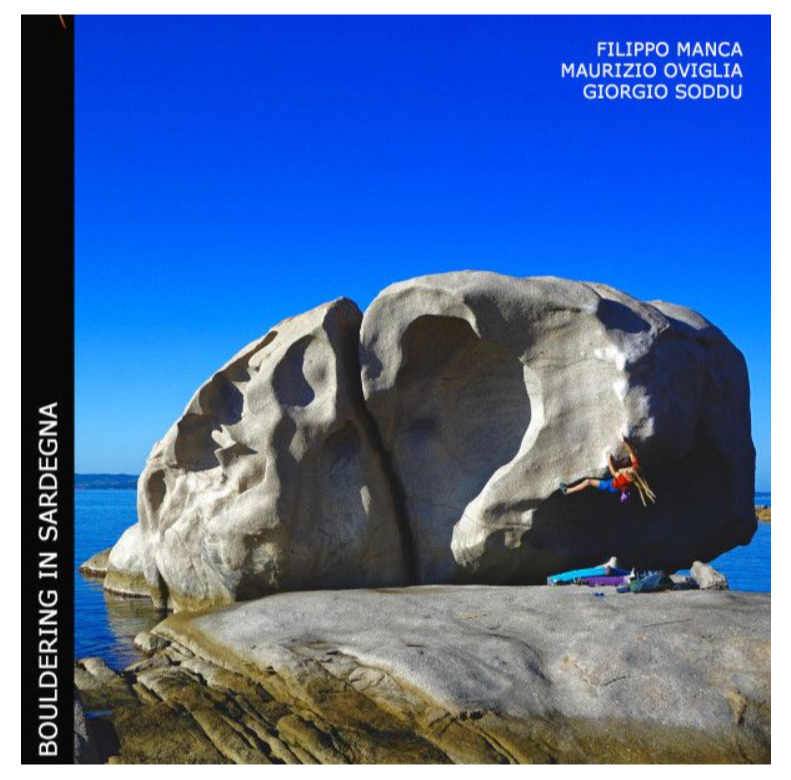
“Pietra di Luna” is a guidebook that provides extensive coverage of bouldering spots across Sardinia, featuring 31 unique locations both along the coast and inland. The majority of these sites feature high-quality granite, with some areas of limestone and basalt as well.
The guidebook is organized into seven main regions:
- Sarrabus in the southeast, near Cagliari, with 4 locations including Rio Cannas and The Ring.
- Geremeas also in the southeast near Cagliari, covering 5 areas like Mari Pintau.
- Torre Delle Stelle, in the southeast near Cagliari, with 6 spots including Superfox.
- Campidano on the west side, featuring 4 areas such as Monte Arci.
- Ogliastra on the eastern side, with 2 areas like Serra Oseli.
- Barbagia, centrally located and extending to the east near Nuoro, with 4 areas including Monte Ortobene, Ollolai, and Orotelli.
- Gallura in the northeast near Olbia, covering 6 areas like La Cerra and Luogosanto.
Each area is depicted with color photo topos and detailed boulder maps, providing descriptions, GPS coordinates, access details, altitude, and optimal seasons for bouldering. This guidebook includes a variety of action photos, chapters on bouldering ethics, and other useful information for visiting climbers.
The new generation of climbers
In recent years, more and more climbers have discovered Sardinia, particularly in the northern part of the island, creating a growing community of climbers.
This increase in popularity is mainly thanks to social media and local developers such as the collective “Primitive Boulder,” who have been active in developing many bouldering areas in the Gallura region.
Their efforts have made the region a more attractive hotspot for bouldering enthusiasts and they are still pushing the development of new areas.
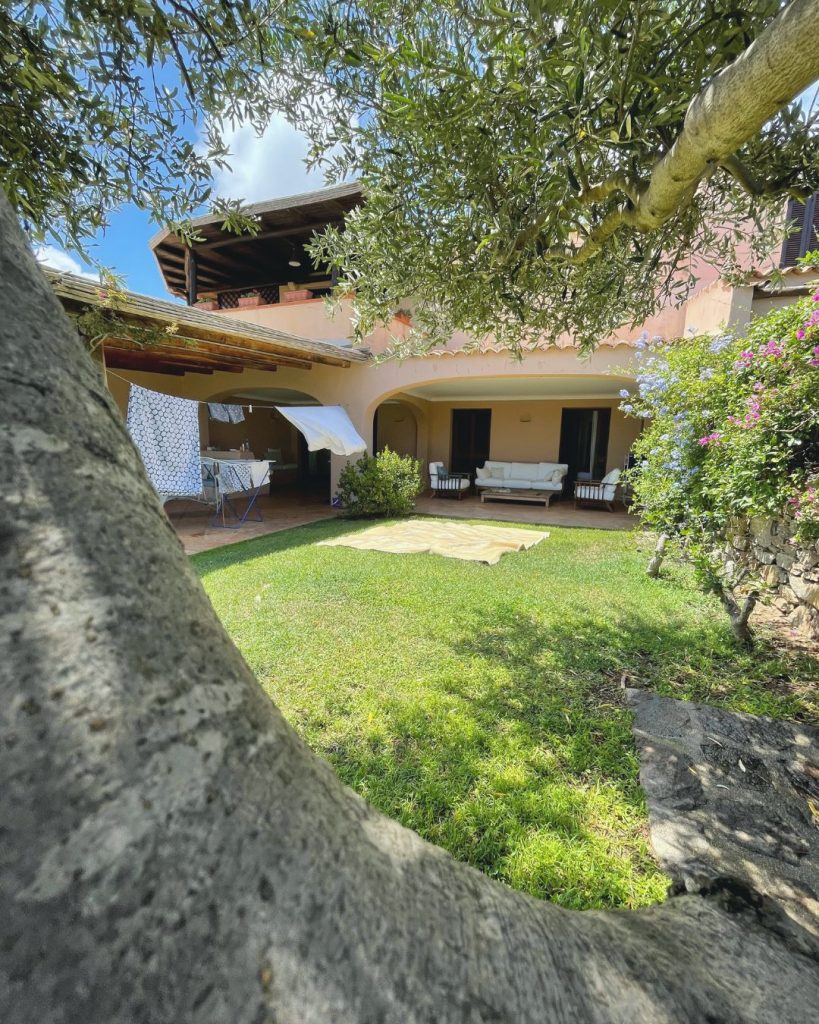
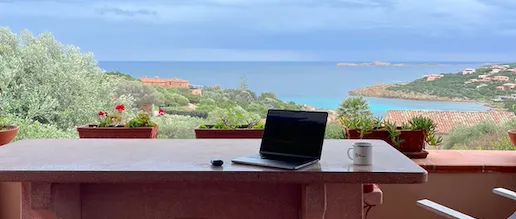
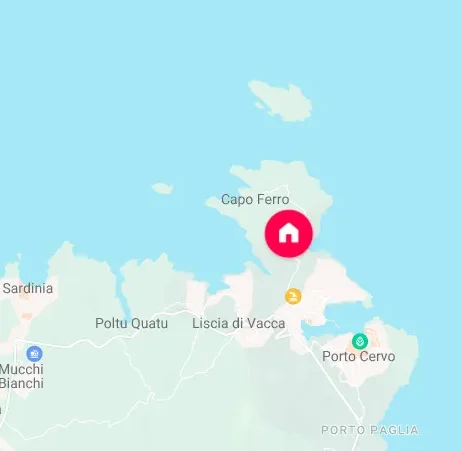
As We Flow Guesthouse
In the past two years, we decided to move here to embrace the beauty of Sardinia and to pursue our passion for climbing.
We are excited to welcome climbers from all over Europe and beyond, providing the best tips, great vibes, and rental gear, as well as joining you for the most memorable bouldering sessions.
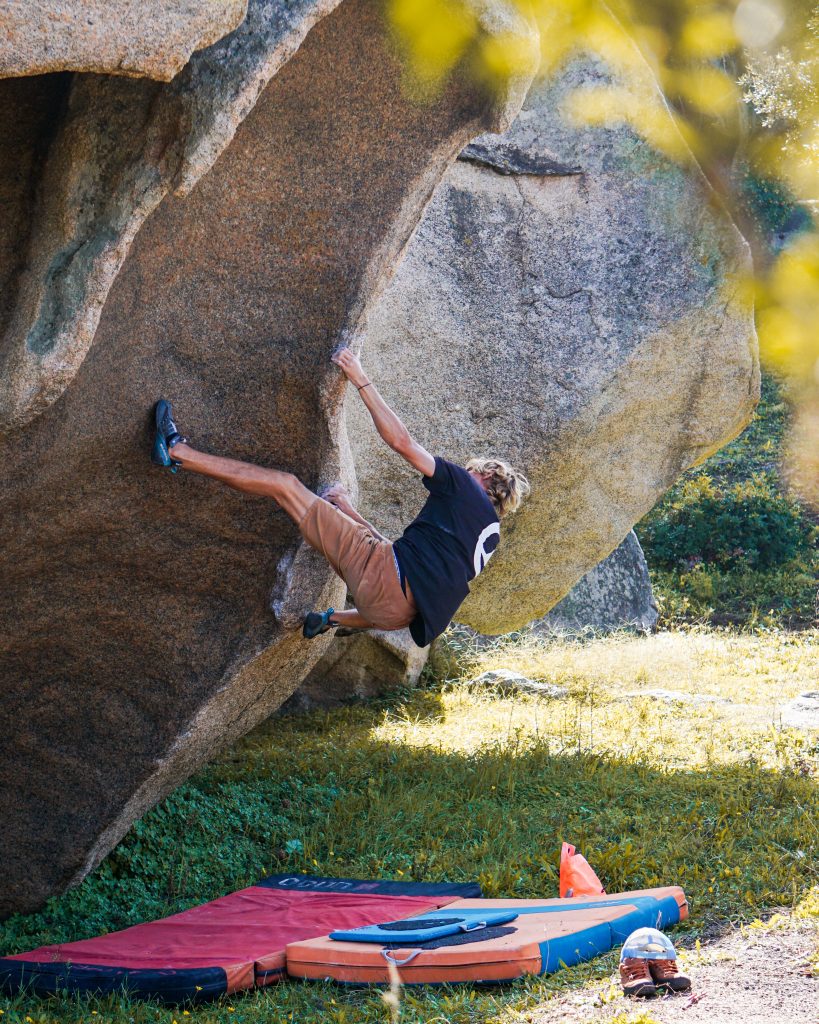
Whether you’re looking to climb new routes or repeat established ones, Sardinia offers the perfect playground for everyone. It’s crucial to preserve these beautiful areas and follow the rules to respect the locals and set a good example for future visitors to this magical place!